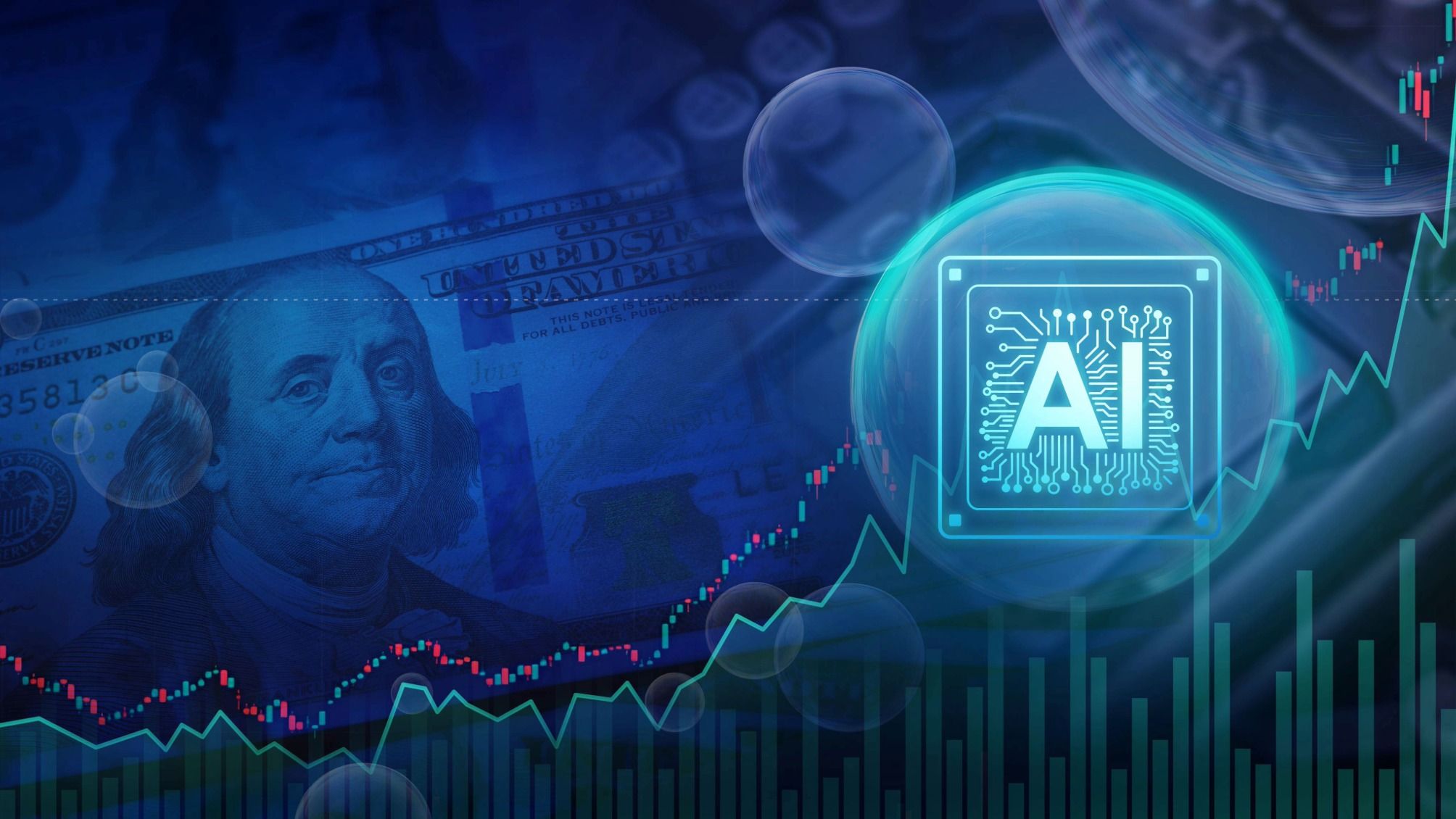
Every morning seems to bring another headline promising a revolution driven by artificial intelligence, but beneath the excitement lies a nagging question for many investors: are we staring at a massive financial bubble? For most people, this isn’t just a theoretical worry. Because the so called Magnificent Seven tech giants now make up nearly a third of the S&P 500’s total value, millions of Americans may be heavily exposed to AI trends through their index funds and retirement accounts without even realizing it.
The anxiety stems largely from memories of the dot com crash of the late nineties. Back then, investors were correct that the internet would change the world, yet they still lost fortunes because they overpaid for companies that couldn’t turn those promises into actual profits. The hard truth is that you cannot bet on a technology itself; you can only bet on specific companies. While some will inevitably emerge as long term winners, others are currently trading on distant expectations rather than tangible earnings.
Preparing for a potential correction doesn’t mean fleeing the market or ignoring AI entirely. Instead, savvy investors are focusing on transparency and balance. One of the first steps is auditing portfolios to see where overlap occurs, as owning multiple growth funds often means owning the same few tech stocks repeatedly. Shifting focus toward companies with proven current profits or moving into AI infrastructure—such as semiconductor makers and power providers—can offer a way to ride the wave of innovation without relying solely on speculative software startups.
Ultimately, successful investing isn’t about predicting exactly when a bubble might burst, but about ensuring that no single trend defines your entire financial future. By diversifying across different sectors and regularly rebalancing assets to trim oversized positions, investors can capture the upside of the AI boom while keeping their safety nets intact. The goal is simple: stay positioned for growth, but remain disciplined enough to survive any sudden shift in market sentiment.